FTSE Two-Month Lows, Bond Surge and Jobs Soften
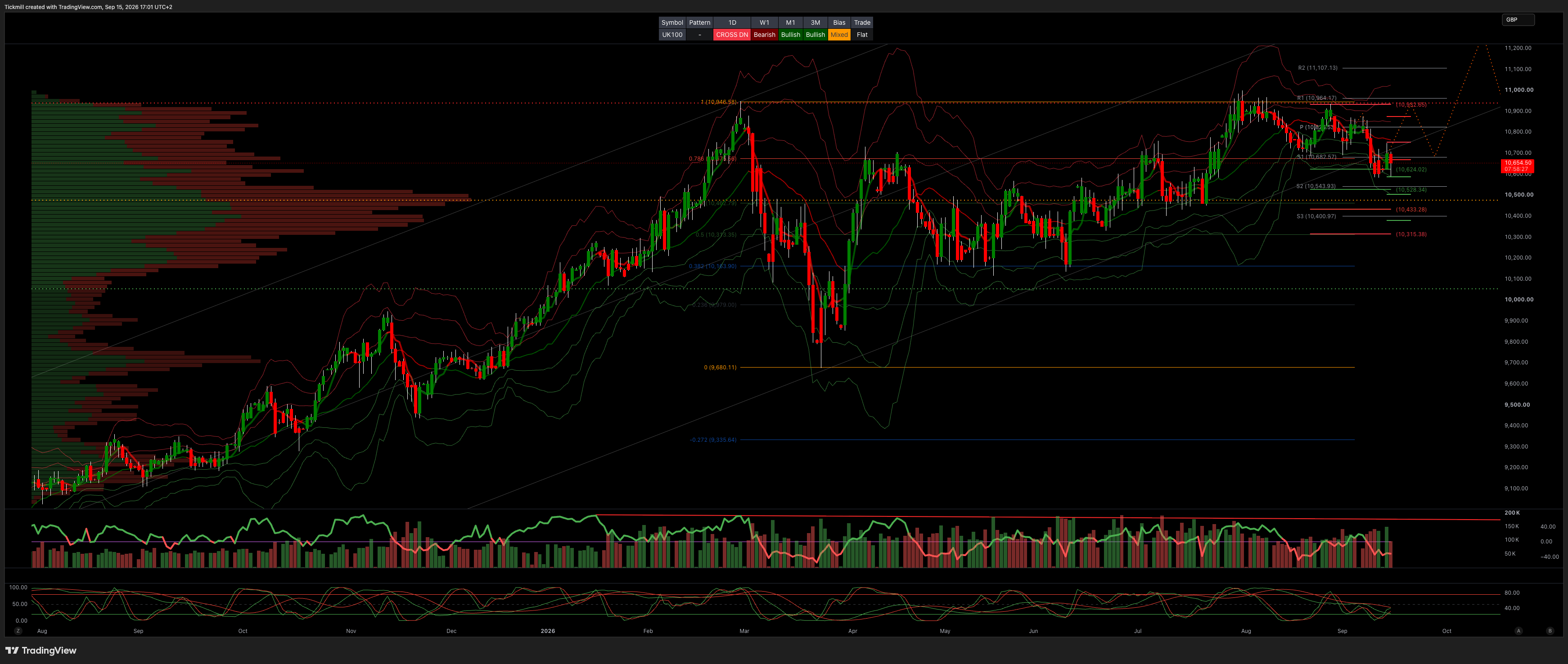
FTSE Finish Line Sep 15 2026: FTSE Two-Month Lows, Bond Surge and Jobs Soften
London shares slipped to two-month lows on Tuesday, as rising crude oil prices pushed global bond yields higher amid persistent inflation concerns. The U.K. stock market briefly recovered from an early setback thanks to strong buying across consumer and property stocks, but weak employment data and Middle East geopolitical tensions ultimately weighed on market sentiment, sending the index negative into the close.
Select consumer and property stocks provided temporary respite during intraday trading. Marks & Spencer moved up nearly 3%, while Persimmon, Kingfisher, Babcock International, NatWest Group, Legal & General, BAE Systems, British Land, Admiral Group, Spirax Group, Next, Land Securities, SSE, Howden Joinery Group, JD Sports Fashion, Standard Life, and Airtel Africa posted gains between 1.4% and 2.8%. Outside the main index, home improvement retailer Wickes Group jumped 10% after reporting strong third-quarter trading driven by mid-single-digit retail like-for-like revenue growth.
Publishing giant RELX led the downside pressure with a 3.2% drop. Broad-based losses hit Experian, Informa, Diageo, Glencore, Aberdeen Group, Entain, London Stock Exchange Group (LSEG), British American Tobacco, IG Group Holdings, ICG, Unilever, The Sage Group, and Standard Chartered, which all shed between 1% and 2.2%. Precious and industrial metal miners fell 1% and 1.7%, respectively, tracking lower underlying copper and gold prices. Online review platform Trustpilot saw its shares plummet 13.7% as its decision to leave its earnings outlook unchanged disappointed investors despite strong AI-led revenues.
Macro conditions and fixed-income volatility continue to cloud the outlook. Global bond yields soared, with 30-year Gilts reaching their highest level since 1998 at 5.91%, as markets weighed crude oil holding above $100 and its potential to force central banks into further rate hikes. Meanwhile, reports suggest the Bank of England is poised to announce this week that it will halt sales of 20- and 30-year gilts, potentially freeing up cash for finance minister John Healey. Money markets show traders expect the BoE to hold rates steady at its policy meeting later this week, though pricing currently implies at least 48.9 basis points of cumulative rate increases by year-end.
On the domestic data front, official ONS figures confirmed the U.K. labour market stayed weak in the third quarter. The unemployment rate held unchanged at 4.9% for the three months to July—beating forecasts of 5%—while wage growth eased. However, employers cut 26,000 jobs in August following a revised 19,000 decline in July, far exceeding the 5,000 reduction expected by economists. Compounding consumer concerns, a separate industry report showed U.K. grocery price inflation accelerated to 2.3% over the four weeks to September 6, ahead of Wednesday’s official CPI release.
Finish Line: U.K. equities surrendered early gains to close at two-month lows as surging 30-year Gilt yields and deteriorating employment figures overshadowed localised strength in retail and housing. With official inflation data due Wednesday and policy decisions from central banks approaching, elevated oil prices and sticky grocery inflation continue to keep investors firmly on the defensive.
TECHNICAL & TRADE VIEW – FTSE100
Daily VWAP Bearish
Weekly VWAP Bearish
Above 10700 Target 11150
Below 10400 Target 9500
Disclaimer: The material provided is for information purposes only and should not be considered as investment advice. The views, information, or opinions expressed in the text belong solely to the author, and not to the author’s employer, organization, committee or other group or individual or company.
Past performance is not indicative of future results.
High Risk Warning: CFDs are complex instruments and come with a high risk of losing money rapidly due to leverage. 69% and 73% of retail investor accounts lose money when trading CFDs with Tickmill UK Ltd and Tickmill Europe Ltd respectively. You should consider whether you understand how CFDs work and whether you can afford to take the high risk of losing your money.
Futures and Options: Trading futures and options on margin carries a high degree of risk and may result in losses exceeding your initial investment. These products are not suitable for all investors. Ensure you fully understand the risks and take appropriate care to manage your risk.
Patrick has been involved in the financial markets for well over a decade as a self-educated professional trader and money manager. Flitting between the roles of market commentator, analyst and mentor, Patrick has improved the technical skills and psychological stance of literally hundreds of traders – coaching them to become savvy market operators!