Institutional FX Insights: Credit Agricole FX Weekly 20/11/26
Is the USD Making a Comeback as a High-Yield Safe Haven?
The recent turbulence in the AI sector, fuelled by the Democratic blue wave, concerns over Nvidia’s leadership, and new U.S. restrictions on advanced chip access, has certainly shaken the tech landscape. Despite this, the U.S. dollar (USD) continues to hold its ground as a dominant player.
We believe that the decline of the AI trade could spell trouble for the USD. In 2026, much of the currency's allure stemmed from investments in U.S. tech stocks rather than U.S. Treasuries (USTs). Some might argue that the latest market movements indicate a resurgence of the USD's reputation as a high-yield safe haven.
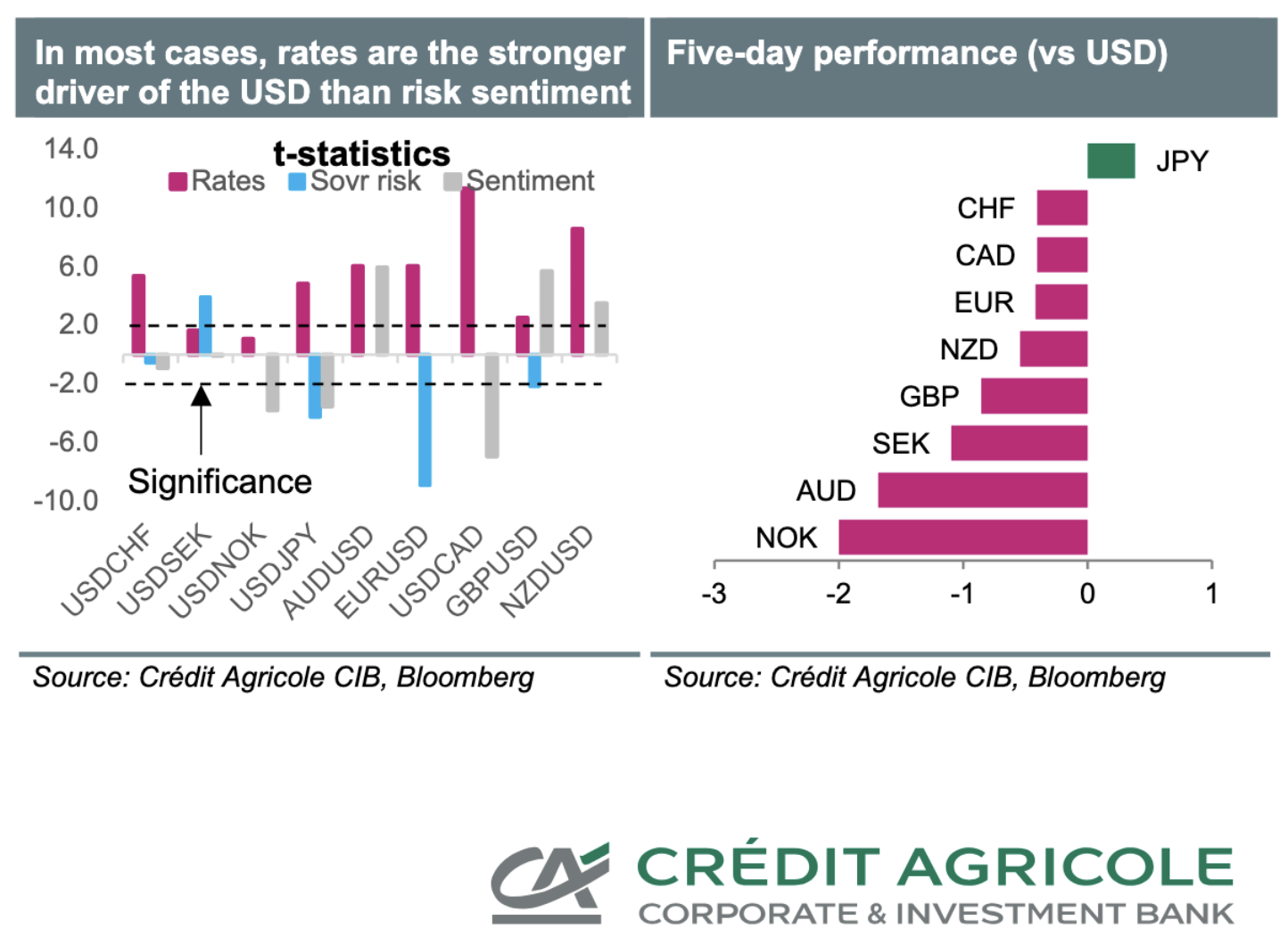
A decline in risk appetite is a significant boon for the USD, especially against currencies like the Canadian dollar (CAD), British pound (GBP), Australian dollar (AUD), New Zealand dollar (NZD), Norwegian krone (NOK), and Japanese yen (JPY). However, this sentiment doesn’t have the same impact on the USD's performance against the euro (EUR), Swiss franc (CHF), or Swedish krona (SEK). Notably, risk sentiment is a more critical factor than interest rates for GBP/USD and plays an equally vital role for AUD/USD. Thus, the recent uptick in U.S. interest rates is a primary driver of the USD's strength, rather than a mere flight to safety.
Sovereign risk is more influential than general risk for EUR/USD and USD/SEK. In the case of USD/JPY, while sovereign risk is a key factor, interest rates are the most important influence on the exchange rate.
Looking ahead to the coming week, economic performance and inflation data will be closely examined across G10 currencies. The U.S., U.K., and Eurozone will release PMI figures, along with Germany's IFO index and U.S. consumer confidence data. Meanwhile, inflation figures from France and Spain will be compared against the core PCE data from the U.S. Australia may see persistent inflation, which could lead to volatility for investors following lackluster labor market data.
In the near term, the broad outlook for the USD could align with the 'USD smile' theory, responding to the resilience of market risk sentiment and trends in U.S. rate markets. Forex investors will closely monitor the performance of U.S. stocks, particularly in light of Anthropic’s IPO, with hopes that it could rejuvenate interest in the struggling tech sector. However, any 'buy-the-rumor-sell-the-fact' reactions in equity prices could ultimately dampen the appeal of the USD, in our opinion.
Disclaimer: The material provided is for information purposes only and should not be considered as investment advice. The views, information, or opinions expressed in the text belong solely to the author, and not to the author’s employer, organization, committee or other group or individual or company.
Past performance is not indicative of future results.
High Risk Warning: CFDs are complex instruments and come with a high risk of losing money rapidly due to leverage. 68% and 74% of retail investor accounts lose money when trading CFDs with Tickmill UK Ltd and Tickmill Europe Ltd respectively. You should consider whether you understand how CFDs work and whether you can afford to take the high risk of losing your money.
Futures and Options: Trading futures and options on margin carries a high degree of risk and may result in losses exceeding your initial investment. These products are not suitable for all investors. Ensure you fully understand the risks and take appropriate care to manage your risk.
Patrick has been involved in the financial markets for well over a decade as a self-educated professional trader and money manager. Flitting between the roles of market commentator, analyst and mentor, Patrick has improved the technical skills and psychological stance of literally hundreds of traders – coaching them to become savvy market operators!