Institutional Insights: Goldman Sachs D1 Flows & Positioning Notes 8/7/26
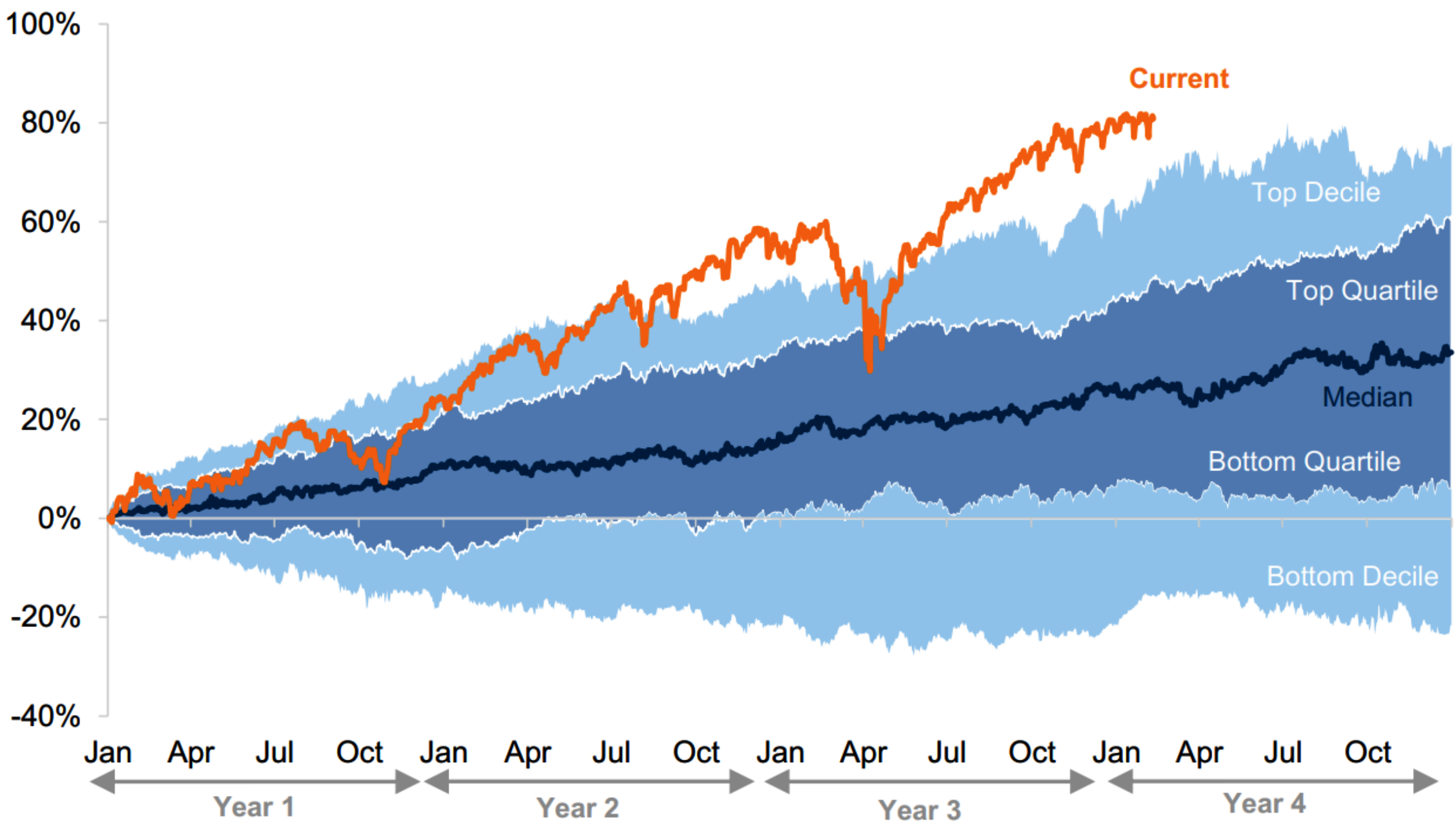
This is a violent momentum unwind, not yet a broad market breakdown. The important distinction is that the S&P is still close to highs, equal-weight and S&P ex-AI are holding up, and breadth was actually healthy with more than half the index closing green. The pain is concentrated in the year’s most crowded winners: AI infrastructure, memory, semis, opticals, Korea tech, and high-beta TMT momentum. That makes this more of a factor crash than a classic risk-off event.
The trading message is to stay in the bull market but stop owning it through the most crowded and levered expressions. High-beta TMT momentum is down more than 20% in five sessions, but positioning is not fully washed out because these baskets remain well up year-to-date. The tape is oversold on price, but not yet normalised on volatility. That means reflexive bounces are likely, but durable re-risking probably needs time, lower realized vol, and cleaner earnings confirmation.
AI is not broken, but the narrative has shifted. The market no longer wants to simply reward capex announcements or second-derivative AI exposure. Investors now need evidence that hyperscalers can translate spending into revenue growth, preserve free cash flow, and modulate spend where needed. If GPT-5.6 materially extends the frontier-model gap, or if China tightens access to domestic models, that could re-energize the strategic AI arms-race narrative. But until Q2 earnings give clarity, broad AI beta remains vulnerable.
The best AI trade now is quality over beta. Own the toll roads — hyperscalers, platforms, and companies with distribution, customer relationships, and monetization power. Be more careful with crowded hardware proxies, memory, opticals, and levered semiconductor ETFs until volatility compresses. Price damage has happened quickly, but these unwinds usually take two to three weeks, not two to three days. The first bounce may be tradable, but it may not be the final low.
The rotation underneath the index is constructive. Healthcare, financials, defensives, bond proxies, and other ex-momentum sectors are starting to outperform. That is what you want to see if the bull market is broadening rather than ending. The better expression is long healthcare, financials, quality defensives, and selected compounders versus short or hedged crowded AI momentum. Do not blindly short the index while breadth is improving.
Oil is a second-order complication. The move higher in crude and tight refined-product markets add inflation pressure and hurt parts of the consumer complex, but a sustained crude breakout still looks capped. The physical crude market remains reasonably supplied, and the US has every incentive to prevent a politically damaging oil spike into the midterms. Iran’s leverage is Hormuz, not necessarily a desire for extreme crude prices. The better trade is to respect a higher floor in oil, but not chase panic upside.
Rates remain the bigger macro constraint. Even if Warsh restores Fed credibility and compresses some policy uncertainty, the long end is increasingly about fiscal supply, deficits, and term premium. Japan is leading the move in global duration, with the UK, France, and Germany moving in the same direction. Long bonds remain difficult to own unless there is a genuine growth shock. That backdrop keeps pressure on long-duration equities and supports a more selective equity tape.
Small caps deserve more caution from here. The earlier setup was helped by accelerating growth and easier Fed expectations, but those tailwinds look less powerful into the back half. The Russell AI infrastructure boost has faded after reconstitution, and Russell 2000 EPS revisions are deteriorating while S&P 500 estimates are still being revised higher. The right small-cap exposure is quality and profitable cyclicality, not broad Russell beta.
Volatility is the clean hedge. With momentum-realised volatility at five-year highs and one-month implied correlation at a twenty-year low, the market is pricing differentiation rather than a simple index crash. Long gamma, selective downside on crowded AI and momentum names, and dispersion-style trades look better than outright index shorts. If index vol is cheap during calm windows, buy protection; if single-name vol has already exploded, be selective.
The dollar is interesting because it may be vulnerable despite risk-off. If this remains a factor unwind rather than a global liquidation, the dollar may not get the usual safety bid. A barbell of long equity volatility and modest short USD exposure makes sense, especially against selective G10 currencies rather than crowded EM. EM still looks vulnerable because positioning is crowded and China domestic demand remains structurally weak.
Within Europe, the cleaner relative trades are Germany over the UK, healthcare over AI, and avoid mining. Germany has a domestic reform angle into 2027, while the UK still has underpriced complexity. European healthcare offers a cleaner defensive-growth rotation than chasing AI spillovers. Mining remains unattractive given weak China domestic demand, fading commodity hedge flows, and poor visibility.
The primary trend can still be higher, but the easy part of the AI-led rally is over for now. The next phase should be wider, bumpier, and more dependent on earnings delivery. Stay in the saddle, but simplify the book. Own quality, healthcare, financials, and the best AI toll roads; trim levered momentum, memory, opticals, and crowded high-beta AI expressions; keep long gamma on; and wait for volatility compression before rebuilding semiconductor exposure aggressively.
Disclaimer: The material provided is for information purposes only and should not be considered as investment advice. The views, information, or opinions expressed in the text belong solely to the author, and not to the author’s employer, organization, committee or other group or individual or company.
Past performance is not indicative of future results.
High Risk Warning: CFDs are complex instruments and come with a high risk of losing money rapidly due to leverage. 68% and 74% of retail investor accounts lose money when trading CFDs with Tickmill UK Ltd and Tickmill Europe Ltd respectively. You should consider whether you understand how CFDs work and whether you can afford to take the high risk of losing your money.
Futures and Options: Trading futures and options on margin carries a high degree of risk and may result in losses exceeding your initial investment. These products are not suitable for all investors. Ensure you fully understand the risks and take appropriate care to manage your risk.
Patrick has been involved in the financial markets for well over a decade as a self-educated professional trader and money manager. Flitting between the roles of market commentator, analyst and mentor, Patrick has improved the technical skills and psychological stance of literally hundreds of traders – coaching them to become savvy market operators!